

The MELODI effect: how digital spectacle and memes are rewriting modern geopolitics
Google AdSense
pub-9343718940553089
blog Post Top
The Roman Empire carved emperors onto coins because most citizens would never see Rome. The British Empire wrapped itself in naval uniforms, parades and maps painted red because distance demanded spectacle. The Soviet Union launched cosmonauts into orbit because steel and ideology alone could not command loyalty. Every great power eventually learns the same lesson. Human beings rarely experience power directly. They experience its symbols.
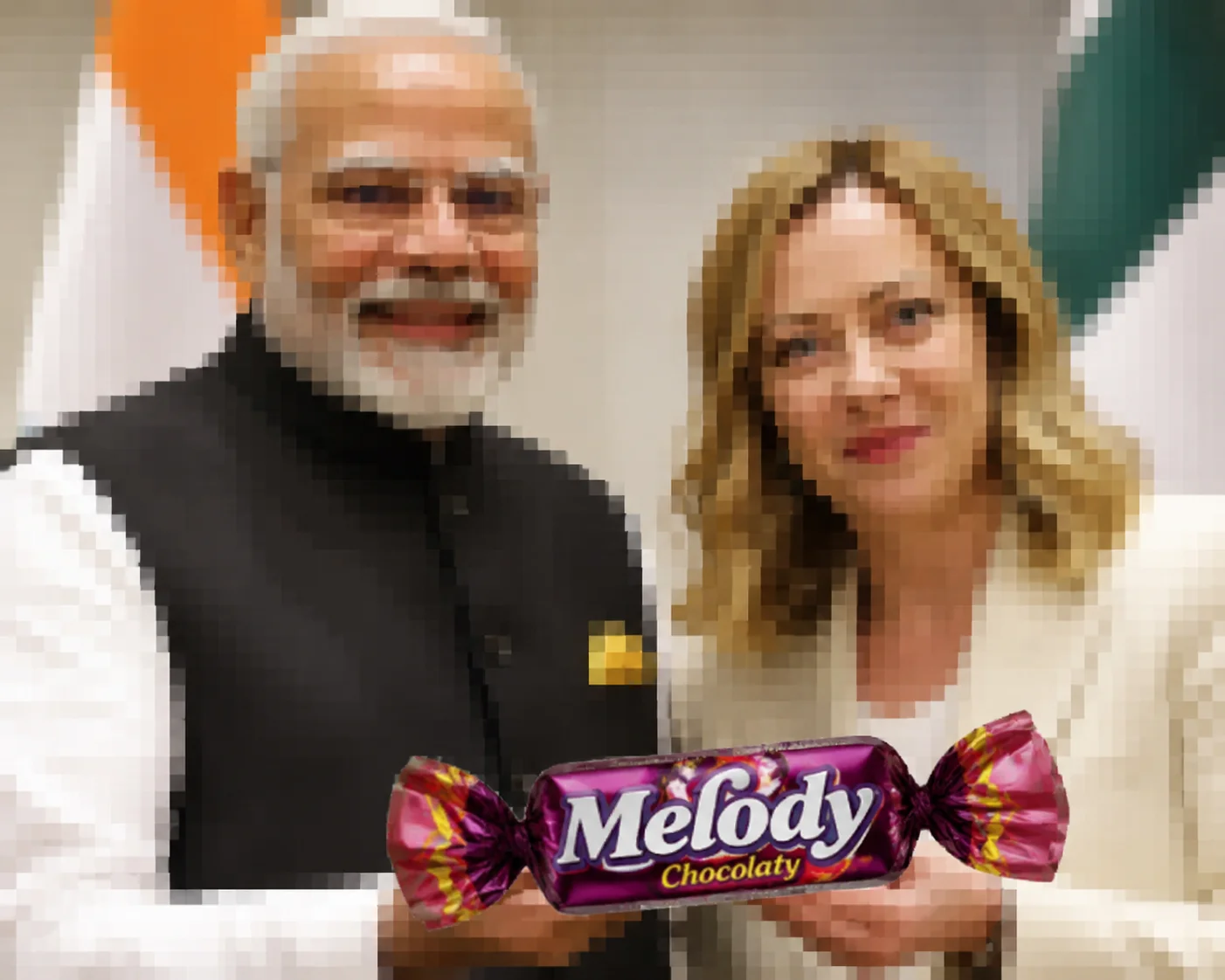
This is why a selfie between Narendra Modi and Giorgia Meloni mattered more than it appeared to. The internet turned the image into “MELODI” within hours. Many dismissed it as another disposable meme produced by a civilization permanently trapped online. Yet the joke revealed a structural shift in global politics.
The modern state no longer competes only through military strength, industrial production or trade dominance. It competes through narrative circulation. Nations now fight to control emotional perception at planetary scale.
> Empires once marched beneath banners. Modern powers trend beneath hashtags.
From Hollywood to hashtags: the evolution of soft power
The twentieth century already hinted at this transformation. The United States understood that Hollywood could travel where aircraft carriers could not. Blue jeans and Coca Cola became geopolitical instruments disguised as consumer products. American power succeeded because it made modernity appear desirable.
The Soviet Union answered with its own mythology of heroic workers, revolutionary sacrifice and technological destiny. Both superpowers recognized that legitimacy depends upon imagination before it depends upon obedience.
The internet accelerated this process beyond recognition. Diplomacy once moved through cables, summits and carefully staged press conferences. Today it moves through timelines. A photograph can now shape geopolitical perception faster than a policy paper. Attention has become a strategic resource.
India’s new digital diplomacy

India increasingly operates within this new reality. For decades New Delhi projected caution. Its foreign policy reflected the anxieties of a postcolonial state attempting to preserve sovereignty in a hostile world. India often sounded moral but rarely cinematic.
That has changed. The country now understands that influence requires visibility. Lunar missions, digital infrastructure, diaspora prestige and civilizational rhetoric form part of a larger campaign to reposition India as a central actor within a multipolar century.
The “MELODI” moment succeeded because it transformed diplomacy into folklore. Millions who knew nothing about India Italy relations instantly absorbed a feeling of familiarity and alignment. The meme compressed statecraft into cultural intuition. That compression matters because contemporary geopolitics increasingly resembles psychological warfare conducted through algorithms.
The theatre of global power
China already grasps this principle. The Belt and Road Initiative is not merely infrastructure investment. It is theatre. Ports, railways and highways operate as visual proof that Chinese history has resumed movement after centuries of humiliation.
America still dominates global imagination through Silicon Valley mythology and the aesthetics of technological inevitability. Even Europe survives geopolitically through symbolic capital. Paris still sells civilization long after France ceased dominating world affairs militarily.

The danger of viral politics
Critics argue that this theatrical politics weakens democracy. They fear governments now prioritize virality over competence. The concern is legitimate. A nation cannot meme itself into economic resilience. Viral diplomacy cannot secure sea lanes or deter military aggression. Spectacle without institutional depth eventually collapses under reality. History is crowded with regimes that mastered propaganda while rotting internally.
Yet the critics misunderstand something fundamental. Politics has always depended upon myth. Ancient kingdoms survived because rulers transformed authority into sacred narrative. Modern republics simply replaced divine kings with secular folklore. Flags, anthems and presidential imagery all perform the same ancient function. They convert abstraction into emotional attachment.
Algorithmic statecraft: the speed of political mythology
The difference today lies in speed. Earlier civilizations needed decades to construct political mythology. The internet manufactures it overnight.
Power now moves at the speed of circulation. A nation ignored by algorithms risks appearing irrelevant regardless of its actual capabilities.
This is why the selfie mattered. It signaled that geopolitics has entered an age where symbolism itself becomes strategic terrain. The battlefield no longer ends at borders. It extends into attention spans, memes and collective imagination.
> Empires once marched beneath banners. Modern powers trend beneath hashtags.
Google AdSense
pub-9343718940553089
blog Post Bottom
Comments0
You must be logged in to join the discussion.
No comments yet. Be the first to start the discussion!