

Quantum computing explained simply: The technology that could change everything
Google AdSense
pub-9343718940553089
blog Post Top
Picture a computer capable of crunching numbers the equivalent of tens of thousands of years in just a few minutes… That sounds a little like science fiction, right? Well, in actual fact, quantum computing is now one of the hottest technological trends around today.
Google, IBM, Microsoft, and Amazon all continue to invest heavily in it. Many governments are considering it crucial. Experts think it has the potential to unlock solutions to problems that are currently out of the reach of even the world's fastest supercomputers.
So what exactly is it that makes quantum computing so revolutionary? And more importantly, is it really worth knowing about, even if you're not a programmer? Spoiler alert: The answer is a resounding yes.
Let's explore this fascinating world simply.
What is Quantum Computing?
First, consider the computer you're currently using – it could be a laptop, smartphone, or gaming console. All of these function using "bits." A bit is a unit of information, and it can only exist in two states: either a 0 or a 1. Every app, website, image, or video you see is constructed from billions of these bits.
Quantum computers don't operate on bits; they operate on "qubits", short for "quantum computing bits". This seemingly minor difference transforms how specific types of problems can be solved. Think of it as the difference between a regular bicycle and a Formula 1 race car; they're both designed for transportation but serve very different purposes. Classical and quantum computing machines are not rivals but tools designed for different tasks.
Why is Everyone Talking About Quantum Computing?

While a few years ago, it was largely confined to research labs, quantum computing is now widely reported due to experts believing it has the potential to fundamentally alter various industries, similar to how the internet once did. Here's why there's so much buzz:
It Can Solve Problems That Are
Some scientific and mathematical problems are incredibly complex, requiring a vast amount of processing power and time even for the most powerful supercomputers to unravel. Quantum computers aim to tackle these challenges much more efficiently.
Large Companies are Pouring in Investment
Tech giants typically don't invest significant amounts of money unless they see a groundbreaking future. They view quantum computing as a game-changing technology for the next decade. Companies such as IBM and Google have already demonstrated functional quantum computing systems, and numerous startups are focused on advancing the technology.
It Can Revolutionize Many Industries
Quantum computing isn't just about raw speed. Its potential applications span various fields, including healthcare, artificial intelligence (AI), cybersecurity, finance, climate research, and logistics. That's why everyone from scientists to business leaders is paying attention.
Classical vs Quantum Computing
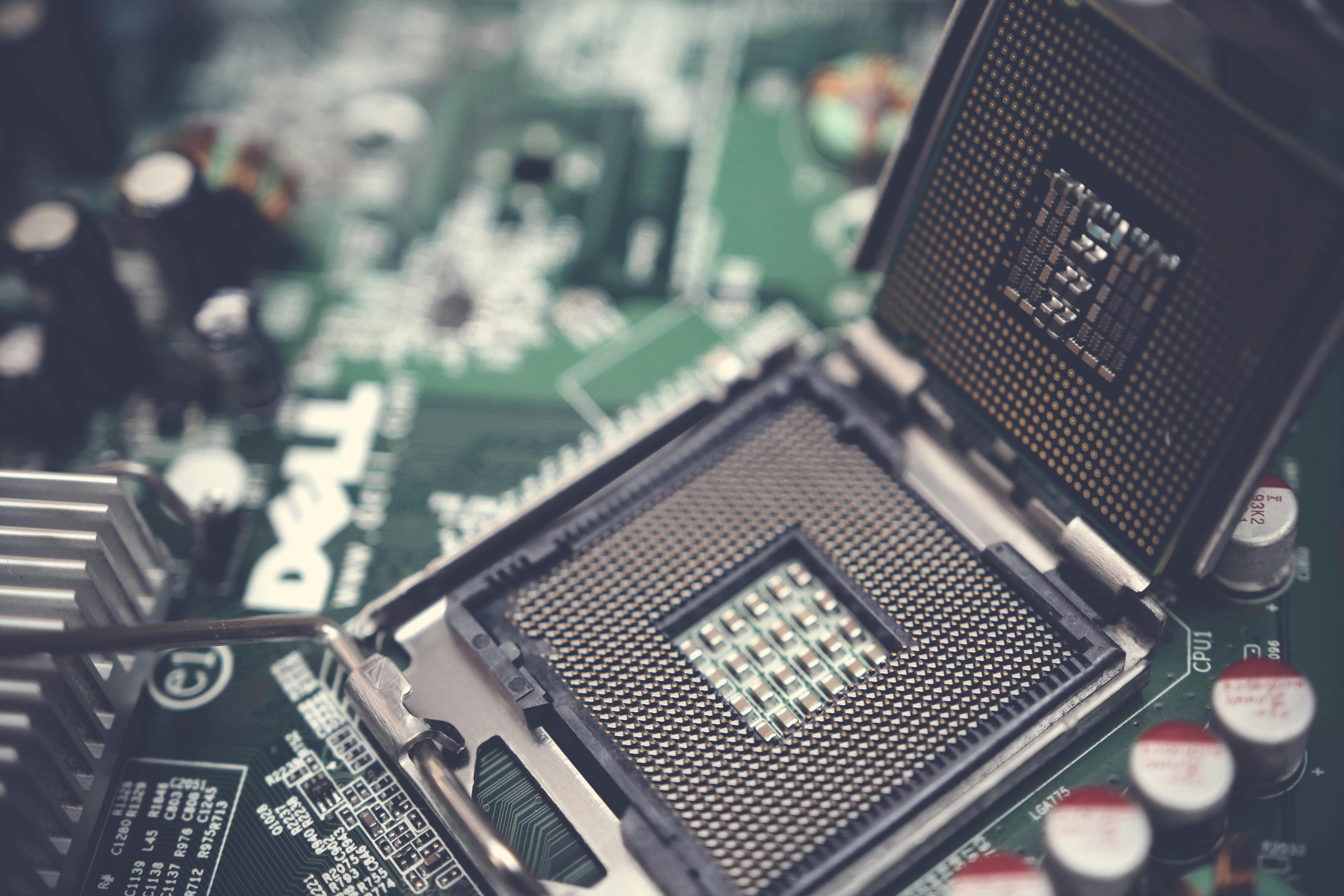
One common misconception is that quantum computers are merely "faster versions" of your regular computers. They're not. Let's simplify the comparison:
Classical Computer Quantum Computer Uses bits Uses qubits Best suited for everyday tasks Ideal for highly complex computational problems Excellent for web browsing, gaming, software development Powerful for scientific research and optimization problems Affordable and readily accessible Expensive and still largely in the developmental stage
Your current computer isn't going anywhere. Even if quantum computing becomes more widespread, you'll continue to use traditional computers for all your daily needs. Think of quantum computers as highly specialised tools, not replacements for your existing devices.
So, What Exactly is a Qubit?
Now, things might get a tad confusing, but don't worry; we'll keep it straightforward. Imagine you toss a coin. Until it lands, you don't know whether it will be heads or tails.
A qubit operates quite differently from a regular bit.
Instead of being restricted to either a 0 or a 1 at any given moment during computation, it follows the principles of quantum mechanics. This unique property allows quantum computing algorithms to explore many possibilities simultaneously in ways classical computers simply cannot.
You don't need to delve deep into the physics to grasp this. Just remember that the qubit is the fundamental component that enables quantum computers to approach problems in entirely new and innovative ways. That's the key to their revolutionary potential.
Why Don't We Just Build More Powerful Regular Computers?
This is a very logical question. Today's computers are already extremely capable. Why venture into something entirely new? Because certain problems escalate in complexity at an exponential rate, and simply adding more processing power isn't enough.
Imagine you're trying to solve a very complex maze. A conventional computer would systematically explore each path, one by one, using standard algorithms. In contrast, a quantum computer would utilise quantum effects to explore these paths more broadly and simultaneously, finding more efficient solutions for that specific problem. This capability makes a significant difference in areas like drug development, weather forecasting, financial modelling, and material science.
A Real-Life Example
Suppose researchers want to develop a new drug. To achieve this, they need to understand how millions of molecules interact with each other – a calculation that quickly becomes astronomical for even the most powerful supercomputers. A quantum computer, however, could naturally simulate these molecular interactions, accelerating the discovery of new treatments. That's why many pharmaceutical companies are eagerly exploring this technology.
Another Example You Can Relate To
Consider you have 10,000 packages to deliver across a city and need to find the most efficient route. The number of possible routes is staggering. Traditional computing struggles to efficiently identify the optimal one. A quantum computer could potentially optimise such complex routing problems, leading to time, fuel, and cost savings for businesses and logistics companies.
So, Are Quantum Computers Better at Everything?
Definitely not. That's one of the major myths. Quantum computers are specifically designed for a particular set of complex problems.
For tasks like browsing the internet, playing games, writing emails, editing photos, and even basic coding, your current computer remains the most suitable and cost-effective tool.
Quantum computers are essentially specialised, powerful machines for highly specialised computational challenges.
Why You Should Care About Quantum Computing
Even if you never interact with a quantum computer directly, its impact could eventually touch your life in numerous ways. We might see revolutionary breakthroughs in drug discovery, significantly enhanced cybersecurity (making your online information more secure), more accurate weather predictions, smarter and more responsive AI systems, optimised transportation networks, and significant advancements in clean energy solutions. Just as many people use the internet daily without fully understanding its technical intricacies, quantum computing could become another of those underlying technologies that quietly improve our lives in profound ways. That's why it's a technology worth paying attention to.
Google AdSense
pub-9343718940553089
blog Post Bottom
Comments0
You must be logged in to join the discussion.
No comments yet. Be the first to start the discussion!